Little Cabin in the Middle of Drina River

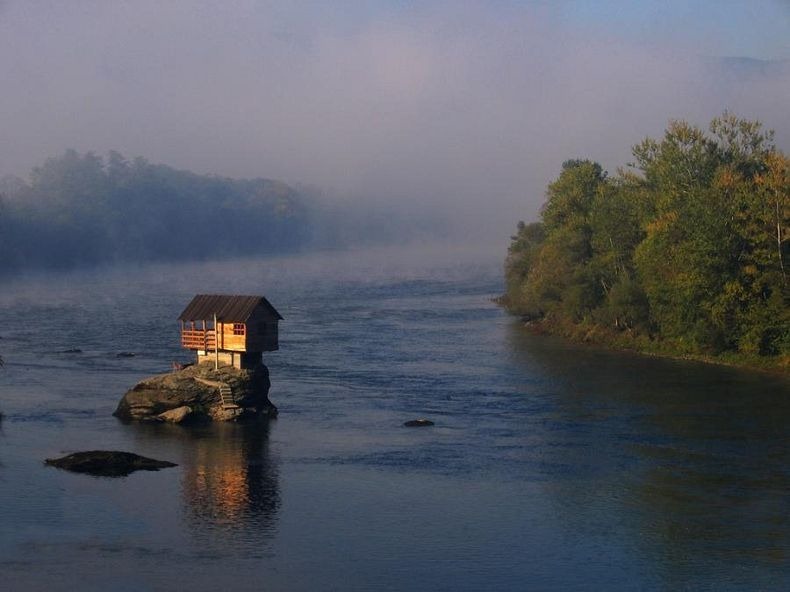
A solitary house on the Drina River in Serbia has been attracting curious travelers from across the globe, after an image of the house was published in National Geographic in August last year. The tiny house stands on an exposed rock in the middle of the Drina River, near the town of Bajina Basta, Serbia. The town lies in the valley of the Drina River at the eastern edge of Tara National Park.

The beauty of the house was captured by Hungarian photographer Irene Becker in August. The picture soon became a hit on the Internet. The house, despite having just found its recent fame, has been standing in the middle of the river for more than 40 years.


The house was built in 1968 by a group of young boys who needed a place to sunbath. As the rock was not exactly the most comfortable place to lie down, they brought some boards from a nearby ruined shed. The following year the boys put up a roof and walls and a house materialized. To transport the materials they used boats and kayaks. Larger pieces were lowered into the water just a few miles upstream, and then caught at the rock.

The house was nearly destroyed several times during flood, but every time it was built from ground up.


Source
READ MORE»

Shibazakura Blossoms at Hitsujiyama Park

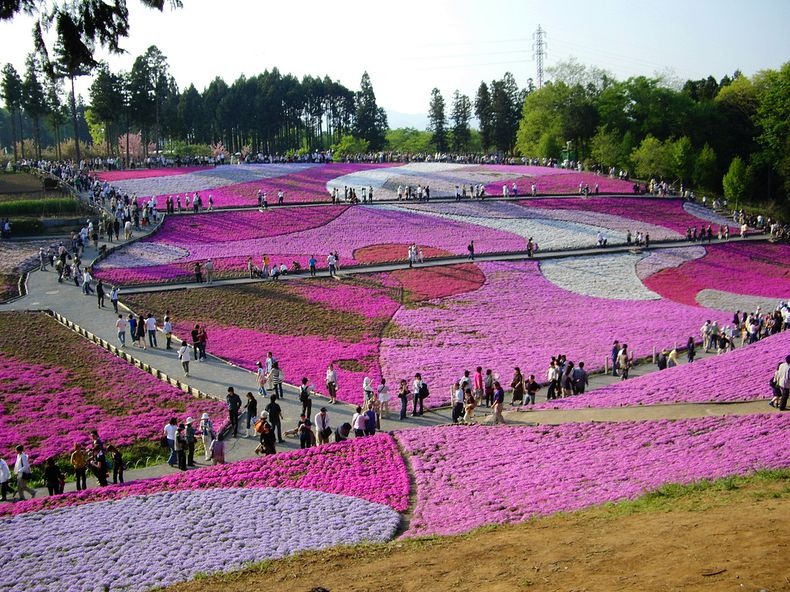
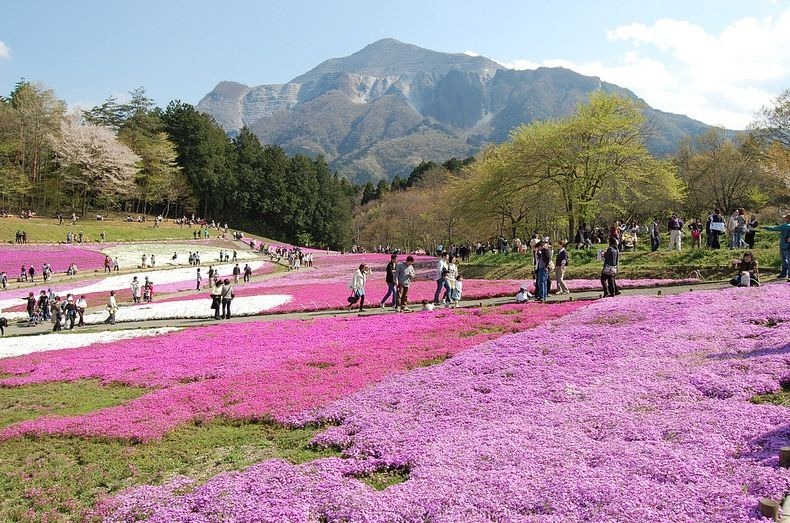
Moss pink, or shibazakura, is a flower that grows close to the ground in brilliant colors of magenta, pink, and white. The season for moss pink, which is from late April to mid-May, comes after the more well-known cherry and peach blossom season in Japan. A popular way to enjoy moss pink is to go to a pink moss festival or park and see the various designs made by arranging the moss pink by color. One of the best places to enjoy the blooming of moss pink is at Hitsujiyama Park close to the city of Chichibu, in Saitama Prefecture.

About 400,000 Shibazakura plants of eight varieties bloom from April to May on the slope of the Hitsujiyama Hill at the foot of Chichibu’s symbolic Mt. Buko, creating an elegant carpet of pink, purple and white. Winding paths lead you across the surreal pink and purple hillside overlooking the city. The backside of the Daisetsuzan Mountain Range offers its pointy snow-covered peaks as a backdrop and tulips adorn the the wide gently-sloped paths on your journey across the hill. Aside from Shibazakura, approximately 1,000 cherry trees, including yoshino cherry, weeping cherry, and double-petal cherry trees, planted in the park, blossom out in April.


Source
READ MORE»

Mount Thor

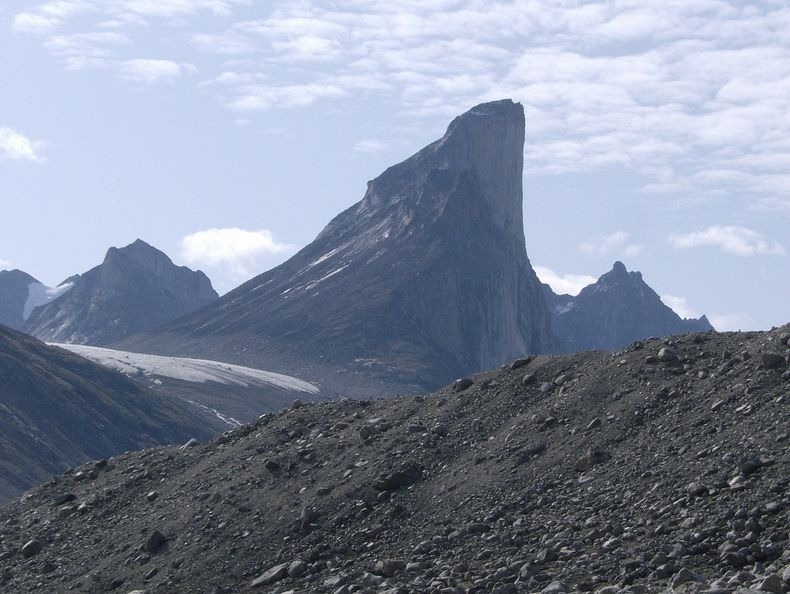
Mount Thor, officially called the Thor Peak, in Auyuittuq National Park, on Baffin Island, Nunavut, Canada, is a granite peak that features the world’s tallest purely vertical drop. The drop measures 1250m and angles inwards at 105 degrees making it more of an overhang. To put the height in context, the Eiffel Tower is 324m, the Empire State Building is 381m, the CN Tower is 553m, and the Burj Khalifa 828m.

Mount Thor is part of the Baffin Mountains which in turn form part of the Arctic Cordillera mountain range. The mountain is made of granite and is the most famous of Canada's mountains named "Thor". Despite the fact the mountain is in a remote area, it's a popular destination for avid mountain climbers. Mount Thor was first climbed in 1965 during the Alpine Club of Canada by an expedition led by Pat Baird. In July 2006, the first successful longest rappel was set on Mount Thor by an American team.


Source
READ MORE»

Thrihnukagigur volcano

Thrihnukagigur volcano, located about 30km from Reykjavik, the capital of Iceland, has become the latest adventure tourism destination, because it is the only dormant volcano that allows regular access to its magma chamber. In most cases, when a volcano erupts, the magma chamber is filled with lava which subsequently cools and hardens, blocking the entrance. But at Thrihnukagigur, it is believed the lava solidified through the walls or simply drained back to the depth of the earth. The magma chamber remained exposed and intact, making this a completely unique phenomenon to Thrihnukagigur.

The volcano last erupted some 4,000 years ago, leaving an opening of approximately 4×4 meters in diameter, leading to a bottle-shaped volcanic vault. The magma chamber is about 120m deep and measures 50x70m at the bottom. An Icelandic tourist operator now provides curious adventurists a chance to explore this ancient volcano inside out.


A basket that holds 5–6 people and connected to a crane is lowered through the crater opening. The 120 meter descent takes about 7 to 8 minutes. Once inside, visitors can spend up to an hour in the magma chamber itself, during which they can see beautiful colourations on the rock surface and marvel at its enormous size. The ground space is equivalent to almost three full-sized basketball courts planted next to each other and the height is such that it would easily fit full sized Statue of Liberty into the chamber.

The tour is open only during the summers, given that the average temperature inside the volcano is always 6°C (43°F), which could make it rather difficult to visit in the winters. The next tour has been confirmed on 15th May, 2013.

The idea of making Thrihnukagigur volcano accessible came from Árni B. Stefánsson, a doctor in Reykjavik and a lifelong cave enthusiast. He has been studying caves in Iceland since 1954, and was the first to descend down the Thrihnukagigur, in 1974.

Árni insists that the preservation of caves and volcanic vaults is not about leaving them be. It´s rather about making sure that natural wonders like Thrihnukagigur are treated with care and respect – and made accessible in the right way. "Firstly this project is about preservation, then exploration, and finally education," Arni told The Guardian in an interview.. "It's not about volcanology, really. It's about the aesthetic … It's about beauty."


Source
READ MORE»

Wonderful Blue Lake Cave in Bonito, Brazil

Bonito is the heart of eco-tourism in Brazil because it is famous for its natural beauty, prehistoric caves, waterfalls, and clear blue waters. One of the most beautiful is Blue Lake Cave (Gruta do Lago Azul). Amazingly, it is believed that no human set foot inside the cavern with the cobalt blue waters until 1924 when an Indian from the Terena tribe discovered it. That’s not to say nothing ventured down into the 328 feet (100 meters) deep cave, since massive mammals fossils from about 10,000 years ago were discovered by cave divers, bones such as those belonging to the Saber-tooth tiger and giant ground sloth. Because the water is so clear, it is hard to fathom that Blue Lake Cave is about 295 feet (90 meters) deep. Adventurers start with a hike through the forest, then go caving through a wide entrance that allows sunlight to illuminate the gorgeous blue waters as well as stalactites and stalagmites of all different sizes. Here’s a look at Bonito, Mato Grosso do Sul, Brazil and some of the extraordinary and unusual ecotourism adventures and true natural treasures including beautiful Blue Lake Cave


Sunlight lighting up the blue waters in the ancient cavern. The cave itself is deep, 328 feet (100 meters) deep, and the lake inside has a depth of about 295 feet (90 meters).


Let’s back up at bit, to show you where you are. This is in Brazil, the state of Bonito, Mato Grosso do Sul. Rainbow over rural Bonito.


Waterfall in Bonito, Mato Grosso do Sul. Bonito is the heart of eco-tourism in Brazil. During the rainy season, from December to March, the vegetation is extremely green and provides plenty of food for the wildlife; the rivers are high and the waterfalls are abundant. Between May and August, there is much less rain so the waterfalls are somewhat less spectacular.


Wikipedia explained, “The Pantanal is an ecological paradise right in the heart of Brazil. It is the largest flooded lowland on the planet and the third largest environmental reserve in the world.” Mato Grosso do Sul is “famous for its natural beauty, and is a major destination for domestic and international tourism. The Pantanal lowlands cover 12 municipalities and presents an enormous variety of flora and fauna, with forests, natural sand banks, savannahs, open pasture, fields and bushes. The city Bonito, in the mountain of Bodoquena, has prehistoric caverns, natural rivers, waterfalls, swimming pools and the Blue Lake cavern.


Bonito is famous for it’s caving and river activities. “Snorkling in the Rio da Prata.” According to Wikipedia, “Bonito is in the middle of a region which is being discovered as ‘Caribe do Centro-Oeste’ (Caribbean of the Central-West) due to the unbelievable blue color of its waters. Owing to the enormous quantity of limestone in the ground, the water of these rivers passes through a real natural filter where impurities are deposited at the bottom of the river bed, leaving the rivers to be some of the clearest and most transparent in the world.”


Fish swimming in the amazingly clear blue waters of Bonito’s River of Silver (Rio da Prata).


Gorgeous Blue Lake Grotto area has an amazing history because its existence went unknown until 1924. It is believed that no human had set foot in this cave until its discovery by one of the local Terena Indians.


Blue Lake State Park is where the adventure begins to reach Gruta do Lago Azul or Blue Lake Cave: “The tour starts with a 10-minute walk to the entrance of the cave, which was discovered by a local Indian in 1924. In its interior, after descending 100 meters, it is possible to see the lake of crystal clear water and depth of approximately 90 meters, which makes it one of world’s biggest flooded caves.”


Descending into Blue Lake Cavern.


The name Mato Grosso do Sul literally means ‘Thick Forest of the South’ in Portuguese, a name inherited from its northern neighbor state of Mato Grosso, of which it was part until the 1970s. It is not uncommon for people to mistakenly refer to Mato Grosso do Sul as simply ‘Mato Grosso’.” Blue Lake Cavern entrance.


In 1992 a Franco-Brazilian expedition of cave divers discovered a numerous mammal fossils inside Blue Lake Cave, including the Saber-tooth Tiger and the giant ground sloth called Megatherium americanum meaning “giant beast” which lived during the Plestocine Era – 6000 to 10,000 years ago.


Adventure underground at Gruta do Lago Azul.


Because the cave entrance is so wide, sunlight pours in to light up the cavern and naturally illuminates the clear vivid cobalt blue water. Here, a shaft of sunlight is focused on a cave formation.


The Blue Lake Cave waters may look shallow but are incredibly deep. You would have no idea that the lake is nearly 300 feet deep.


The cavern is full of different-sized formations, stalactites and stalagmites.


Gruta Do Lago Azul, or the Blue Lake Cave, is also called the Blue Lake Grotto.


Looking up from the Blue Lake cavern.


Blue Lake Cave in Bonito Brazil.


Gruta do Lago Azul is a part of one of the largest flooded cavities on the planet


Besides Blue Lake Cave, another gorgeous ecotourism cave in Bonito is Abismo Anhumas, known as the ‘hole.’ It is relatively new, since it only opened for exploration in 1999.


Explore Caverns Now explained that Abismo Anhumas visitors rappel 236 feet (72 meters) down through the hole to a floating deck on a crystal clear lake which is 262 feet (80 meters) deep. People can swim or dive among the huge underwater cave formations, some as tall as 65 feet (20 meters).


More well-known, yet still as unusual as it is beautiful is to take an adventure caving to see the amazingly blue water at Blue Lake Cave.


Gorgeous reflection at Blue Lake Grotto in Bonito.


Source
READ MORE»