Shigir Idol - Oldest Wooden Statue in the World

Twice as old as the Egyptian Pyramids, samples of the Shigir Idol are sent to Germany for testing. This ancient example of human creativity was recovered in January 1890 near Kirovgrad but there remains uncertainty over its age, believed to be around 9,500 years old. Made of 159 year old larch, it is covered with Mesolithic era symbols, which are not yet decoded. Some 2.8 metres in height, it appears to have seven faces.


Made of 159 year old larch, it is covered with Mesolithic era symbols which are not yet decoded.

This ancient example of human creativity was recovered in January 1890 near Kirovgrad but there remains uncertainty over its age, believed to be around 9,500 years old. Made of 159 year old larch, it is covered with Mesolithic era symbols, which are not yet decoded. Some 2.8 metres in height, it appears to have seven faces.

It was protected down the millennia by a four metre layer of peat bog on the site of an open air gold mine.

Now held in Yekaterinburg History Museum, lack of funding has until now prevented the proper testing for age of this Urals treasure.


The ornaments, which cover the Idol, are the encrypted information of the knowledge which people passed on.

Now, German scientists secured a grant which they hope will provide the Idol's age to within half a century.

'There is no such ancient sculpture in the whole of Europe. Studying this Idol is a dream come true', said Professor Thomas Terberger, of the Department of Cultural Heritage of Lower Saxony.

Uwe Hoysner, from Berlin Archaeological Institute said: 'The Idol is carved from larch, which, as we see by the annual rings, was at least 159 years old.

'The samples we selected contain important information about the isotopes that correspond to the time when the tree grew.'

Mikhail Zhilin, professor of the Institute of Archaeology of the Russian Academy of Sciences, said: 'This is a unique sculpture, like nowhere else in the world.

'The Shigir Idol is both very lively, and very complex.

'The ornaments, which cover the Idol, are the encrypted information of the knowledge which people passed on'.


Studying this Idol is a dream come true.

The samples used for testing were cut in 1997. The was extracted in several parts from the peat bog.

Professor Dmitry. I. Lobanov combined the main fragments to reconstitute the sculpture 2.80m high but in 1914 the Siberian archaeologist Vladimir Tolmachev proposed a variant of this reconstruction by integrating previously unused fragments.

Some of these fragments were later lost, so only Tolmachev's drawings of them remain.

However, these suggest the original height of the statue was 5.3 metres.

Some 1.93 metres of the statue did not survive the 20th century's revolutions and wars and it is only visible on his drawings.

But even the size is it now makes it the highest wooden statue in the world.


Drawings of archeologist Vladimir Tolmachev with 'faces' marked red; Vladimir Tolmachev by the bog where the Idol was found, two earliest reconstructions of the idol - the walking and the standing upright, and a building of Urals history museum in 1910. 

One question debated by Russian scientists is how the Idol - as high as a two-storey house - was kept in a vertical position?

Museum staff believe it was never dug into the ground to help it stand upright, and that it was unlikely it was ever perched against a tree, because it would have covered more than half of its ornaments. Museum staff suggest that the Idol was an ancient 'navigator', a map. Straight lines, wave lines and arrows indicated ways of getting to the destination and the number of days for a journey, with waves meaning water path, straight lines meaning ravines, and arrows meaning hills.


Source
READ MORE»

Top 10 Plant Based Foods That Boost Your Immunity

The plant world contains a natural army of foods that are ready to fight — infections, that is! Getting a steady supply of the following foods helps you build up immunity so that, when that cold comes for you, you may be able to block it entirely — or, at the very least, not let it affect you as much.

In addition to eating these ten foods regularly, you can use them to make home remedies at the first sign of a cold or flu!


1. Garlic

The most pungent of the plant kingdom inhabitants, garlic contains the immune-stimulating compound allicin, which promotes the activity of white blood cells to destroy cold and flu viruses. It also stimulates other immune cells, which fight viral, fungal, and bacterial infections. Garlic kills with near 100 percent effectiveness the human rhinovirus, which causes colds, common flu, and respiratory viruses.

Because allicin is released when you cut, chop, chew, or crush raw cloves, allow freshly chopped garlic to stand for 10 minutes and then cook it, sprinkle it over foods, drop it into soup, or swallow bits of garlic with some water like a pill. You can also drop a clove of garlic into some honey and swallow it immediately for a quick dose that tastes good!


2. Onions

Onions, like garlic, contain allicin. They also contain quercetin, a nutrient that breaks up mucus in your head and chest while boosting your immune system. Additionally, the pungency of onions increases your blood circulation and makes you sweat, which is helpful during cold weather to help prevent infections. Consuming raw onion within a few hours of the first symptoms of a cold or flu produces a strong immune effect.

Chopping onions into your favorite soup or cooked recipe is a great way to enjoy them. Also, it may sound a little weird, but putting half an onion in your bedroom while you sleep can help absorb some of the circulating bacteria and potentially lessen the symptoms of your cold.


3. Ginger

Spicy, pungent, and delicious, ginger reduces fevers, soothes sore throats, and encourages coughing to remove mucus from the chest. Anti-inflammatory chemicals like shagaol and gingerol give ginger that spicy kick that stimulates blood circulation and opens your sinuses. Improved circulation means more oxygen is getting to your tissues to help remove toxins and viruses.

Research has indicated that ginger can help prevent and treat the flu. Ginger is also extremely helpful for stomachaches, nausea, and headaches.

If you’re feeling a little sickly, a homemade ginger tea is one of the best things you can drink. Slice some fresh ginger root, place it into a pot with water, and bring to a boil. Then drop in a bit of lemon juice or cayenne, which makes the tea that much more effective at nourishing and purifying your system.


4. Cayenne

The cayenne family of hot peppers (cayenne, habanero, Scotch bonnet, and bird peppers, to name a few) contains capsicum — a rich source of vitamin C and bioflavonoids, which aid your immune system in fighting colds and flus. It does this by increasing the production of white blood cells, which cleanse your cells and tissues of toxins.

Cayenne pepper is also full of beta carotene and antioxidants that support your immune system and help build healthy mucus membrane tissue that defends against viruses and bacteria. Spicy cayenne peppers raise your body’s temperature to make you sweat, increasing the activity of your immune system.

The fresher the pepper, the more effective it is. However, fresher also means spicier, so choose accordingly.

When you’re sick, add organic cayenne powder to some warm water with lemon juice for an intense immune boost.


5. Squash

Squash is a good source of vitamin C and carotene. The six carotenoids (out of the 600 found in nature) found most commonly in human tissue — and supplied by squash and other gourds — decrease the risk of various cancers, protect the eyes and skin from the effects of ultraviolet light, and defend against heart disease.

One of them, alpha-carotene, helps slow down the aging process. Butternut squash is the strongest source of these nutrients, but you can also try acorn, Hubbard, delicata, calabaza, and spaghetti squash.


6. Kale

Like other leafy greens, kale offers up a good dose of vitamin E. This immunity-boosting antioxidant is known for increasing the production of B cells, those white blood cells that kill unwanted bacteria. Whether you eat kale raw in a salad, steam it, or lightly sauté it, you’ll reap all of its wonderful benefits.


7. Citrus Fruits

Adding a bit of citrus to your diet goes a long way toward fending off your next cold or flu. Packed with vitamin C, oranges and grapefruits help increase your body’s resistance to nasty invaders.

The best way to enjoy citrus fruits is to eat them whole. Otherwise, you can make fresh juice yourself (stay away from the premade stuff in cartons or in the freezer section at your supermarket).


8. Green Tea

Green tea is a potent source of antioxidants called polyphenols — especially catechins. Some studies have found that catechins can destroy the influenza and common cold viruses.

Sipping a hot cup of green tea when you’re feeling under the weather can really help you come alive again. Try adding some honey or lemon to kick it up a bit.


9. Miso Soup

Miso soup is the plant-based version of chicken-noodle soup. It has wonderful healing properties that are amazing at boosting immunity. As a living food, miso is loaded with enzymes and healthy bacteria that help fight infection and keep your cells thriving.

All you need is one teaspoon of miso paste stirred into a mug or bowl of warm water, and you’re set. Sip this down, especially at the first sign of a cold or when you’re just feeling “off” with a stomachache, headache, or something like that. This is sure to hit the spot and make you feel good all over.


10. Mushrooms

For centuries, people around the world have turned to mushrooms for a healthy immune system. Contemporary researchers now know why. Studies show that mushrooms increase the production and activity of white blood cells, making them more aggressive. This is a good thing when you have an infection.

Shiitake, maitake, chaga, and reishi mushrooms appear to pack the biggest immunity punch. Experts recommend eating a quarter ounce to an ounce a few times a day for maximum immune benefits.


Source
READ MORE»

Has Nessie Been Relocated?

A strange animal resembling the legendary Loch Ness Monster has allegedly been spotted in England, nearly 150 miles from Scotland's Loch Ness, where the monster is said to call home, Web Pro News reported. Over the years, intense speculation through eyewitness accounts coupled with numerous photos and videos have kept the mystery creature alive in headlines.


A British photographer taking scenic pictures at Lake District National Park captured the image of a strange object resembling the legendary Loch Ness Monster.

A British photographer taking scenic pictures at Lake District National Park recently captured the image.

Ellie Williams, 24, of London, said her camera was capturing automatic pictures at England's Lake Windermere throughout the day in an attempt to photograph some of the park's wildlife.

It wasn't until Williams was looking through the images that she spotted an interesting photograph of a large-shaped creature that appears to clearly be moving throughout the series of shots, according to UPI.

However, Williams stopped short of suggesting the creature could be the much hyped Loch Ness Monster taking a trip from her traditional home at Loch Ness in Scotland.

"When I reviewed all the images I thought it might have been a swan or a goose, as I was looking at the image on my smartphone," Williams told The Mirror. "I'm open to suggestions as to what the creature could be - I'm just glad I put the camera in the right place at the right time."

Obviously, it remains unclear whether the creature pictured in the photo is similar to the Loch Ness Monster or just a trick of the camera, but Williams confirmed that none of the images had been altered or edited in any manner.

The rumored beast, nicknamed "Bownessie," was first sighted in 2006. Since then, tourists have reported witnessing a Nessie-like creature at the park.

Meanwhile, other animals or creatures resembling the Loch Ness Monster have also been spotted in England's lake district over the years. Considered to be a local mascot of the area, the creature has earned itself a Twitter account, according to WPN.


Source
READ MORE»

Passage du Gois

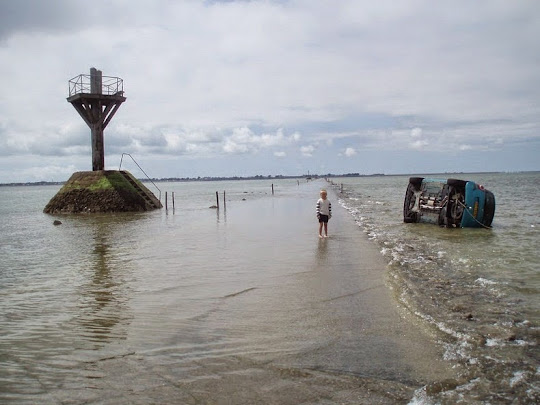
Passage du Gois is a submersible causeway in the Bay of Bourgneuf, linking the island of Noirmoutier to the mainland in the department of Vendée, in France. Twice a day, for an hour or two, the tide goes out and the causeway becomes visible and accessible to traffic. For the rest of the day, it remains flooded under 1.3 to 4 meters of water and cannot be used.

Although causeways such as Passage du Gois exist in other places (there is one in the county of Jindo in Korea), the uniqueness of Passage du Gois lies in its exceptional length - 4.5 km. In the 18th century, the causeway was much longer because the old dikes were farther from the coast.


In the early days, the only way to reach Noirmoutier was by boat. Then the Bay of Bourgneuf gradually silted up and the causeway was formed allowing men and animals to wade through the waters to the island. In fact, the name “Gois” comes from the verb "goiser" which means to walk while wetting one’s shoes. It was in 1701 that the passage connecting the mainland to the island was first mentioned on a map.

This curiosity has existed since the collapse of the plateau which gave birth to the bay of Bourgneuf. Over a thousand years, the two currents from the north and south hitting the bay has resulted in deposition of silt, and that has continually moved before stabilizing, about a century ago to the current location. Later, stabilization work was done to prevent sand from moving and a cobblestone road was laid down. Around 1840, a regular service was provided by car or on horseback. In 1971, a bridge linking the island to the mainland was built as an alternative route to the island of Noirmoutier.


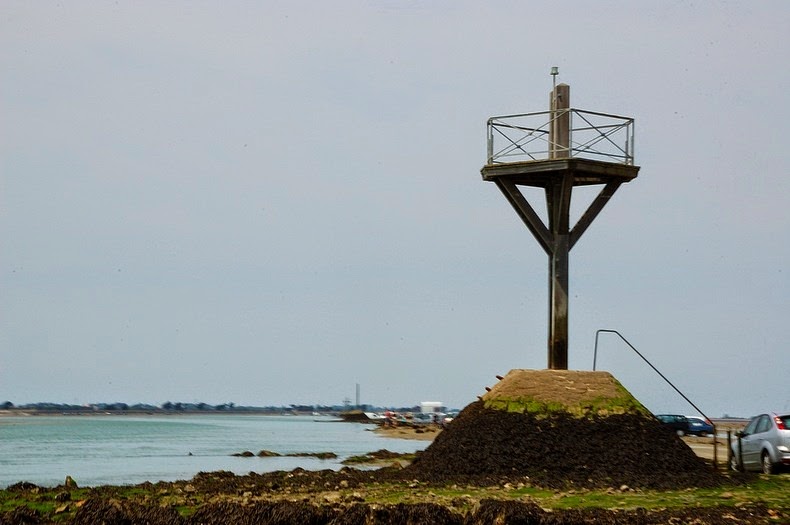
Crossing the causeway is considered perilous. Although tide times are precisely marked on either side of the causeway on large signs, the water comes in at an incredible rate and many visitors get caught out every year. Elevated rescue towers are located all along the Passage du Gois for those caught between the tides. One can climb these towers and wait until they are rescued or the tide falls again.

During low tide, hundreds of tourists and locals alike come to walk, cycle or drive across the Gois. The causeway also attracts a lot of shell seekers looking for edible shells on the exposed sand, especially at low spring tides when the vast expanses of sand which are rich in all manner of shell fish are exposed.

Since 1986, an unusual race across the causeway – the Foulées du Gois – is held every year. In 1999 Passage du Gois was also used by Tour de France bicycle race.


Foulées du Gois 2013, the annual race


Looking for shells.


One of the several rescue towers along the Passage du Gois.


Source
READ MORE»

Gaiola - The Cursed Island

Gaiola Island (Isola della Gaiola in Italian) is one of the minor islands of Naples, Italy, located in the Gulf of Naples in the heart of Gaiola Underwater Park, a protected region of about 42 hectares. The island consist of two stunning and serene islets. Located on the southern border of Posillipo and very near to the coastline – about 30 meters away, the island is easy to reach. While one of the islet has a solitary villa, the other is uninhabited. A small bridge connects the two islets, which are separated by just a few meters. The bridge is very narrow and looks like a natural arch connecting the two islets.

The island takes its name from the cavities that dot the coast of Posillipo, originating from the Latin cavea, "little cave", and then through the dialect "Caviola". Originally, the small island was known as Euplea, protector of safe navigation, and was the site of a small temple dedicated to Venus. There are also several other ruins from the time of the Romans. In fact, below the islets in the water are several Roman structures that are now the home of marine creatures. Some believe that the poet Virgil, regarded as a magician, taught here at the ruins.


In early 19th century, the island was inhabited by a hermit known as "The Wizard". Soon after, the island saw the construction of the villa that occupies it today and which was, at one time, owned by Norman Douglas, author of Land of the Siren. The island might seem as a perfect post-retirement getaway, however, the locals believe the island to be cursed, a reputation that came about because of the frequent premature death of its owners.

The series of misfortunes started sometime around the 1920s, when the then owner, a Swiss named Hans Braun, was found murdered and wrapped in a rug. A short while later his wife drowned in the sea. The villa’s next owner was the German Otto Grunback, who died of a heart attack while on the island. A similar fate befell the pharmaceutical industrialist Maurice-Yves Sandoz, who committed suicide in a mental hospital in Switzerland. Its subsequent owner, a German steel industrialist, Baron Karl Paul Langheim, was dragged to economic ruin by wild living. The island has also belonged to Gianni Agnelli, the head of Fiat, whose only son committed suicide. After his son's untimely death Gianni had started grooming his nephew Umberto Agnelli to run Fiat, but Umberto also died of some rare cancer at the young age of 33. Another owner, the multi-billionaire Paul Getty, after buying the island, had his grandson kidnapped. The island’s last owner Gianpasquale Grappone was jailed when his insurance company failed. Today, the villa is uninhabited and abandoned.


Source
READ MORE»