
At the turn of the 20th century, during the great era of railways, each city on the western seaboard of the North American continent needed a fast and reliable supply line from the east to ensure growth and prosperity. San Diego was a small port city at that time and business pioneers decided that for the city to grow, it they needed a direct link connecting with El Centro to the east, to supplement the supply line from its larger, northern neighbor, Los Angeles. The San Diego and Arizona Railroad was proposed.
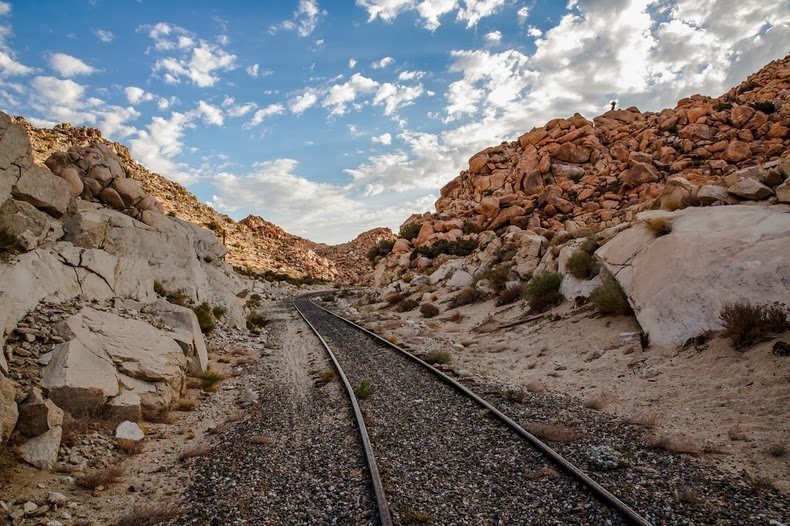
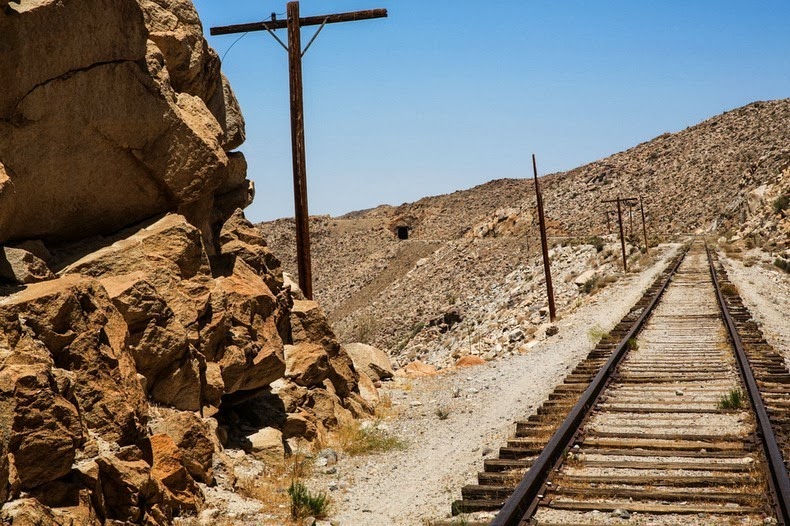
The builders soon realized that the rail link to El Centro presented massive engineering challenges. Conditions were harsh and the treacherous mountain ranges were near impassable with gigantic boulders, deep valleys and numerous ridges and canyons. The prospects were so hopelessly against them, that it became known as "the Impossible Railroad", a name made more apt by the hostile desert climate, with temperatures in the summer soaring to over 110 degrees Fahrenheit.

It took the construction of 17 tunnels, ranging in length from 290 feet to half a mile, and 20 trestles to complete the most mountainous eleven-mile stretch, but the railroad was finally completed in 1919.
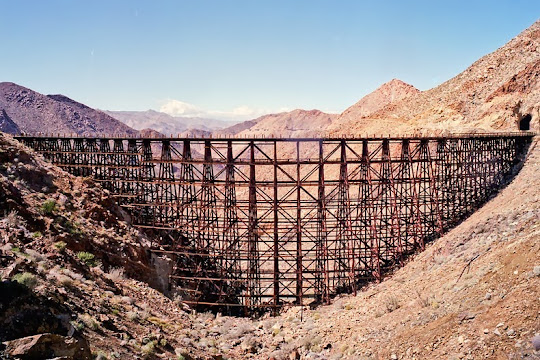
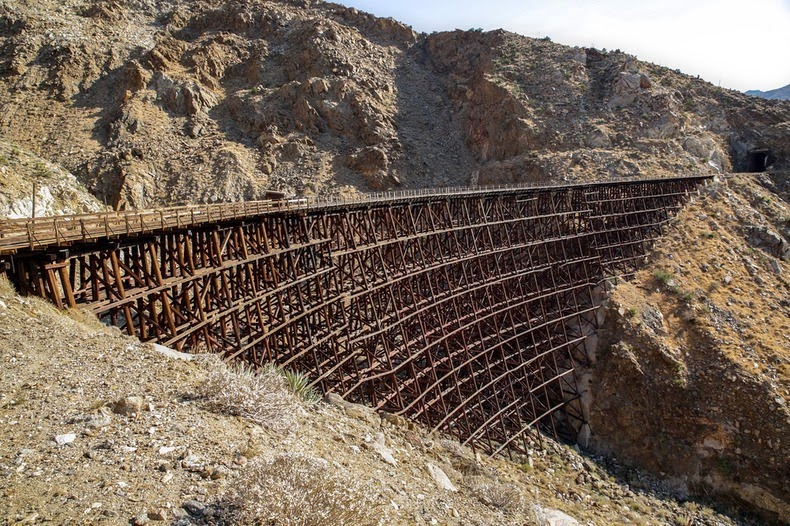
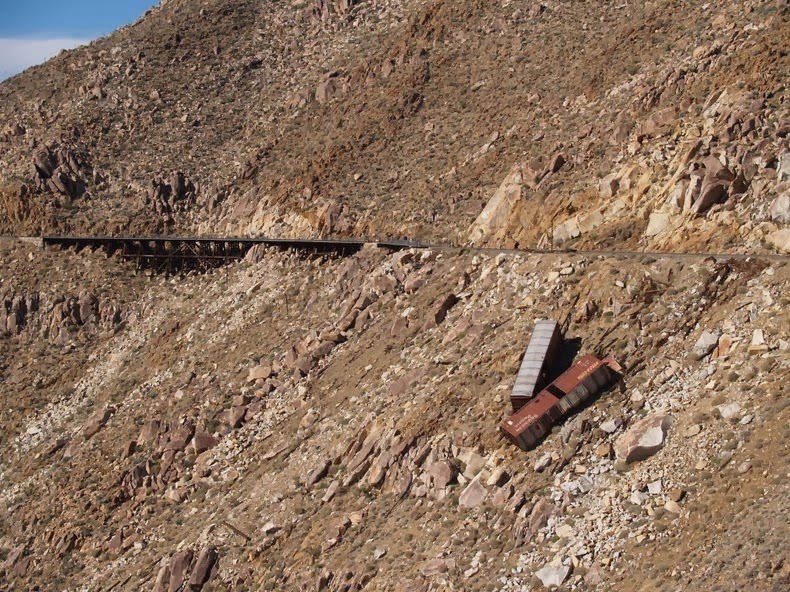
Maintaining the Carrizo Gorge section with its numerous tunnels and trestles was a constant challenge, especially in this earthquake-prone country. When an earthquake collapsed one of the tunnels in 1932, the engineers chose an alternate route around the ridge. But the alternate route necessitated the construction of a bridge over a steep lateral gorge known as the Goat Canyon. The wooden trestle that was constructed here, remains to this day, the longest, tallest curved wooden trestle ever built in the United States. Over 600ft long and 180ft high in the center, the magnificent structure is an engineering marvel that very few has seen.
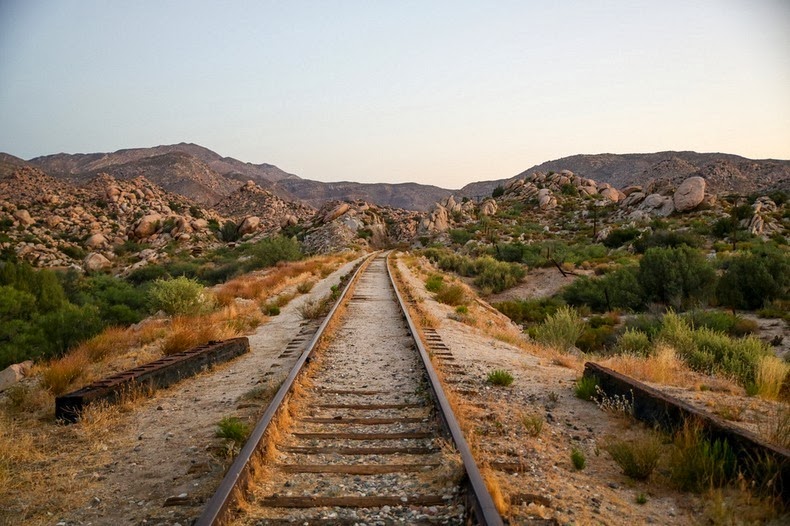
The last passenger train to travel the full length of the railroad left San Diego on Jan.11, 1951, but the railroad continued to ferry freight through the Carrizo Gorge until September 1976 when tropical storm Kathleen washed out the impossible railroad in numerous places. The damage to the section through Carrizo Gorge was so massive that it remains closed to this day. The abandoned railroad now attracts adventurist and railway buffs who try to follow the rails all the way from the high point in Jacumba down the gradient to Ocotillo in a spectacular journey of about 22 miles through a stark desert landscape, dotted with the efforts of railroad engineers to tame this wilderness, an effort that came to nought.




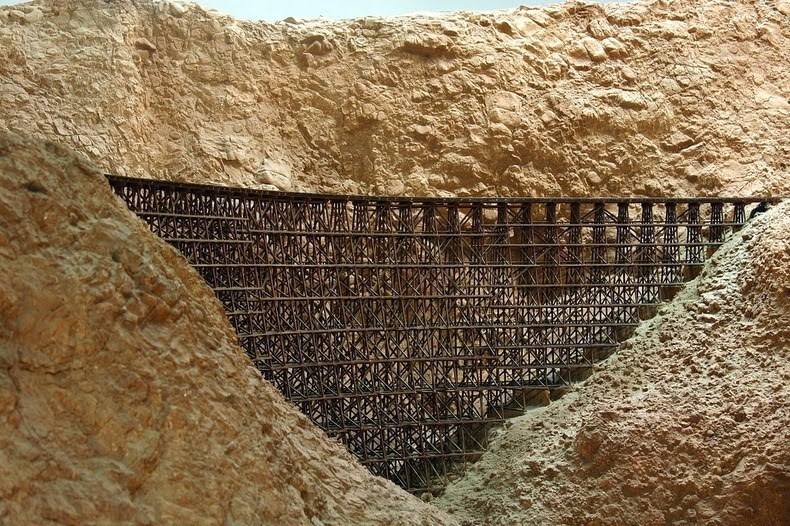
A scale model of the Goat Canyon trestle at San Diego Model Railroad Museum.

A model of the Goat Canyon trestle at San Diego Model Railroad Museum.


Source
READ MORE»
The builders soon realized that the rail link to El Centro presented massive engineering challenges. Conditions were harsh and the treacherous mountain ranges were near impassable with gigantic boulders, deep valleys and numerous ridges and canyons. The prospects were so hopelessly against them, that it became known as "the Impossible Railroad", a name made more apt by the hostile desert climate, with temperatures in the summer soaring to over 110 degrees Fahrenheit.
It took the construction of 17 tunnels, ranging in length from 290 feet to half a mile, and 20 trestles to complete the most mountainous eleven-mile stretch, but the railroad was finally completed in 1919.
Maintaining the Carrizo Gorge section with its numerous tunnels and trestles was a constant challenge, especially in this earthquake-prone country. When an earthquake collapsed one of the tunnels in 1932, the engineers chose an alternate route around the ridge. But the alternate route necessitated the construction of a bridge over a steep lateral gorge known as the Goat Canyon. The wooden trestle that was constructed here, remains to this day, the longest, tallest curved wooden trestle ever built in the United States. Over 600ft long and 180ft high in the center, the magnificent structure is an engineering marvel that very few has seen.
The last passenger train to travel the full length of the railroad left San Diego on Jan.11, 1951, but the railroad continued to ferry freight through the Carrizo Gorge until September 1976 when tropical storm Kathleen washed out the impossible railroad in numerous places. The damage to the section through Carrizo Gorge was so massive that it remains closed to this day. The abandoned railroad now attracts adventurist and railway buffs who try to follow the rails all the way from the high point in Jacumba down the gradient to Ocotillo in a spectacular journey of about 22 miles through a stark desert landscape, dotted with the efforts of railroad engineers to tame this wilderness, an effort that came to nought.
A scale model of the Goat Canyon trestle at San Diego Model Railroad Museum.
A model of the Goat Canyon trestle at San Diego Model Railroad Museum.
Source


